Juliana: “The mindset is crucial”
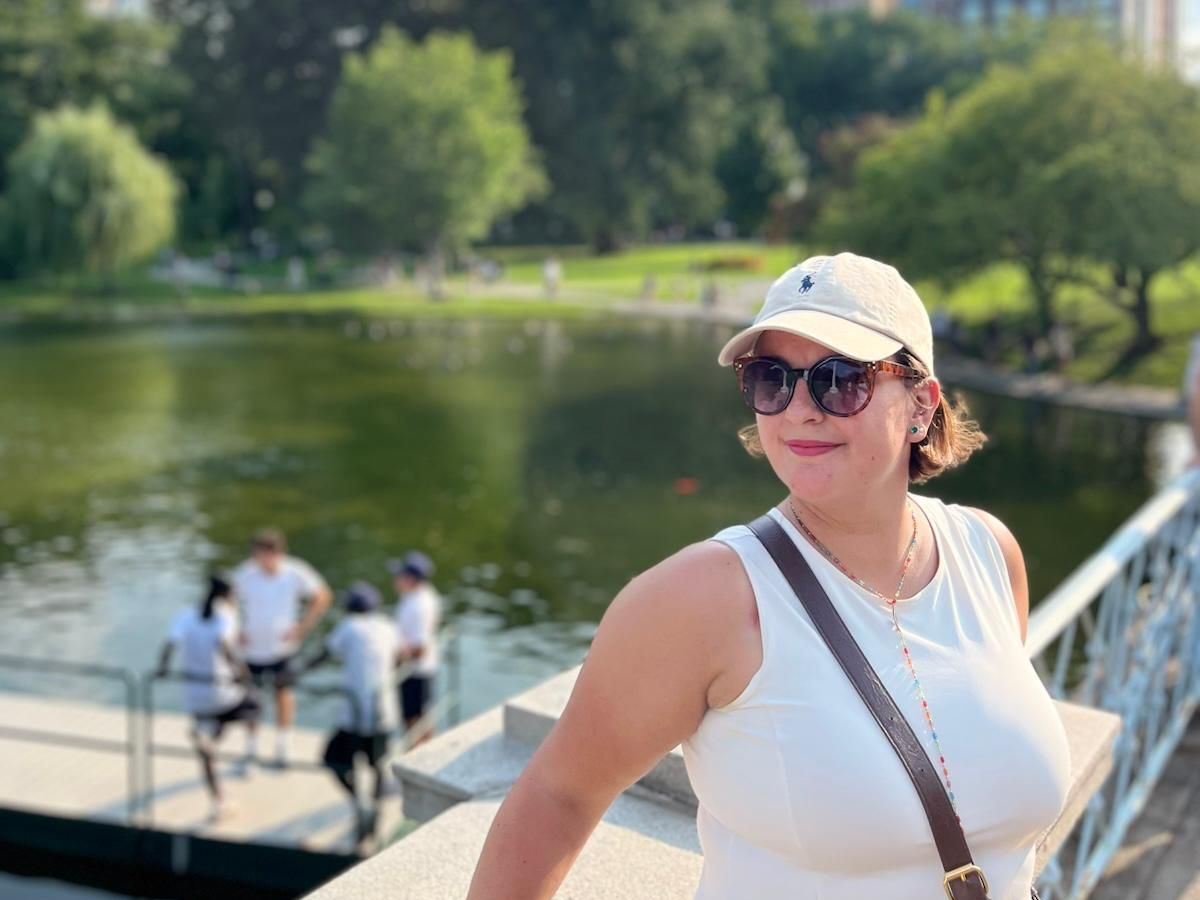
Juliana is Brazilian, married, and the mother of a teenage daughter. She works in the corporate world. She was diagnosed with breast cancer at 38 and went through 18 sessions of chemotherapy, then surgery, then radiotherapy. She speaks Portuguese and English, and is learning Dutch (she reached B1 level during her treatment). She found CSN through Instagram near the end of her chemotherapy.
Getting the news
"I went in to my huisarts, to my GP… and she felt the tumour. I couldn't feel it, but she did, and she sent me to [get a] mammogram. She said you're going there, and my appointment was on a Thursday, and on Monday I was at the hospital to do an ultrasound, a mammogram, and immediately he did my biopsy. And he said, 'Well, now it's one week to get the results. In the meantime, we are done here.'"
"[The nurse I saw afterwards told me that] 'Yeah, but from my experience, you have cancer, and the results are just going to show you what kind of cancer it is.' …and I was a bit shocked because I was not. Expecting that you know, I was just expecting an exam and an appointment. At the time, I thought it was a bit harsh. Looking back at it today, I think it was somehow positive because, well, I had one week to prepare for something that I already knew."
"[It] suddenly hit me in the middle of the road when I was driving back, and also I had just to park my car, and I cried a lot. And I called my parents, my mom in Brazil… and they helped me calm down a little bit."
"It's a very very Dutch way of delivering news."
"[They] were always very honest and open to me… This is the list of symptoms you may have from the chemo, and it was like a huge paper. It doesn't mean that everything will happen, but at least you are prepared that all these things can happen."
A positive mindset
"I know every journey is different, and what I say is that people need to… have faith that it's gonna be hard, yes, but there's always a light at the end of the tunnel somehow, and be positive. I think it's the first thing that I always tell people. Like the mindset is crucial. I think, for a treatment like this."
"It's not a dreamy mindset. It's a mindset to know that yes, it's gonna be hard, but yes, it can be over, and this shall pass, and soon life can go back to normal."
"And of course never making it sound smaller than it really is, of course, but trying to make people feel comfortable and feel, they feel that it's okay to talk about what they're feeling. It's okay to complain. It's okay to be worried. You know, to be afraid, scared… It's not a toxic positivity, which I also don't like, but more like a positive mindset. You know, to face this."
Preparing for treatment and appointments
"I'm also very practical. So, the first month before starting the treatment… I didn't know what was going to happen. That was really annoying for me. You know, I was going to the appointments and I would leave there with a list of exams and no answer on when will I start?"
"Once I had the plan, I was like, okay, good. We have a plan. It's strong. It's hard, but it's doable… and that gave me peace of mind. I think knowing what was coming, I didn't know how I was going to react to it, but I knew what was coming. I knew, okay, it's 18 sessions of chemo. Okay, I can do this."
"My husband had an Excel sheet with a list of symptoms… that I felt each day, so he was always coming with me, and he would open the laptop in the appointment… She had a little bit of fever on this day. She didn't eat."
"…day two or three after chemo, I cannot do anything. I just need to rest. And day seven, eight after chemo, I'm okay. So I can do more things. So I could plan to go and see friends or have a walk, things like that."
"Trying to see people as much as I could, because this is what the doctor said. You try to have a normal life as much as you can."
Language and healthcare in the Netherlands
"Zero language barrier in my hospital in my treatment. Everyone could speak English, very good English, and they didn't have a problem with it."
"[There was a] note in my folder that I was an English speaker, so I didn't have to say, 'Hi, can you please switch to?' They come with me in English straight away, you know, for the exams, for chemo, for surgery."
"They gave me a full paper of instructions in Dutch… I got there a few days later, and they said, 'Oh, look, we have this for you.' And they translated everything these two, three days, and they gave me it in English… because we want you to have all the information in a way that you can understand."
"I found the hospital a very nice place to practice Dutch because they're very patient… But after my surgery, the nurses came to me and they didn't speak the best English. That was the area where it was a bit more difficult."
"I also never found anyone else going through cancer in the same hospital that I am going… So maybe it was lucky in my hospital."
After treatment ended
"I finished chemo [on the] 24th of December… [A] month later I had my surgery. Then I had a month to recover, and then I had my radiotherapy, so when it was all over, it was a relief."
"Then it was weird because before I would stay home and I had a routine knowing like this day I'm bad, this day I'm fine, this day I'm bad, this day I'm fine… But I still couldn't go out much and see people and do things with people because they had their normal routines, normal lives going on."
"I started working again, end of May… they said, 'Well, we'll go back three days a week, two hours per day.' That's nothing. That's easy, you know. But then it was a bit of a shock because it was not so easy. I would be done with two hours."
"So it is a bit harder because we think it's over, and visually it's over. Of course, we have hair growing back, life going back to normal, but internally we are still recovering."
"My memory was gone, a very sharp memory I had before… The ability to focus was gone. So, a lot of normal things that were normal for me were not so normal anymore."
"I knew I had to respect my body and wait and give it time to recover, but I wanted to go back immediately, jump back to where I was… I think everyone was very supportive around me as well. You know, at home, at work, my team and the company, very supportive and very respectful of that."
Finding CSN
"I didn't want to join any groups. I didn't want to talk… Every case is different, you know, and I don't want to be comparing my case with others."
"I started looking on the internet, trying to see some stories and I felt comfortable doing this because I already knew how I was reacting, how my body was reacting. My tumour had already disappeared, so I didn't have those fears anymore."
"My body stopped production of hormones, so I had a lot of insomnia during the night… Sometimes I would be just scrolling on Instagram… out of nowhere, a sponsored post from CSN on Instagram showed up. That's how I found out. I had no idea, and I dropped a message, and [Kat] responded, and I joined the network."
"It was an eye opener to see such different stories… sometimes I want to share my positive experience, but I don't want to be the toxic positivity in the group, you know."
"I've been to some of the activities already, some paint workshops, the boat afternoon tea… the one year anniversary."
"If you would ask me before cancer, 'Juliana, wanna go? Do you wanna go for the 20 kilometres walk?' Of course not, and now I can do it. So, it was very special."
Asking for help
"Don't struggle. Reach out for support… I'm also not a person to ask for help, and I learned it during my treatment… you need to ask for help on this period. So, yeah, it's difficult. But I think only with time we realised how important it is."
Juliana learned in the CSN group that patients have the right to a second opinion, and has passed that on to a friend who was recently diagnosed.
"You have the right to ask for a second opinion. If you want, you can ask your GP, you can ask your oncologist, and you can have it."
Support for the supporters
"Everybody worries about the patients, but who takes care of the patients is also something that is very, very important because they are also struggling."
"At least my daughter did show. She wanted to be the strong one, but she was struggling inside. So, yeah, support for the supporters as well."
"It's very important to try to trust, trust people, trust doctors, trust the process, and trust your body, right? Because it's amazing the things it can do."
This is Juliana's personal experience, shared with permission. It is not medical advice. If you need urgent help, contact your GP or huisartsenpost, or call 112.