Abby: “Someone validating that it is what it is, helps”
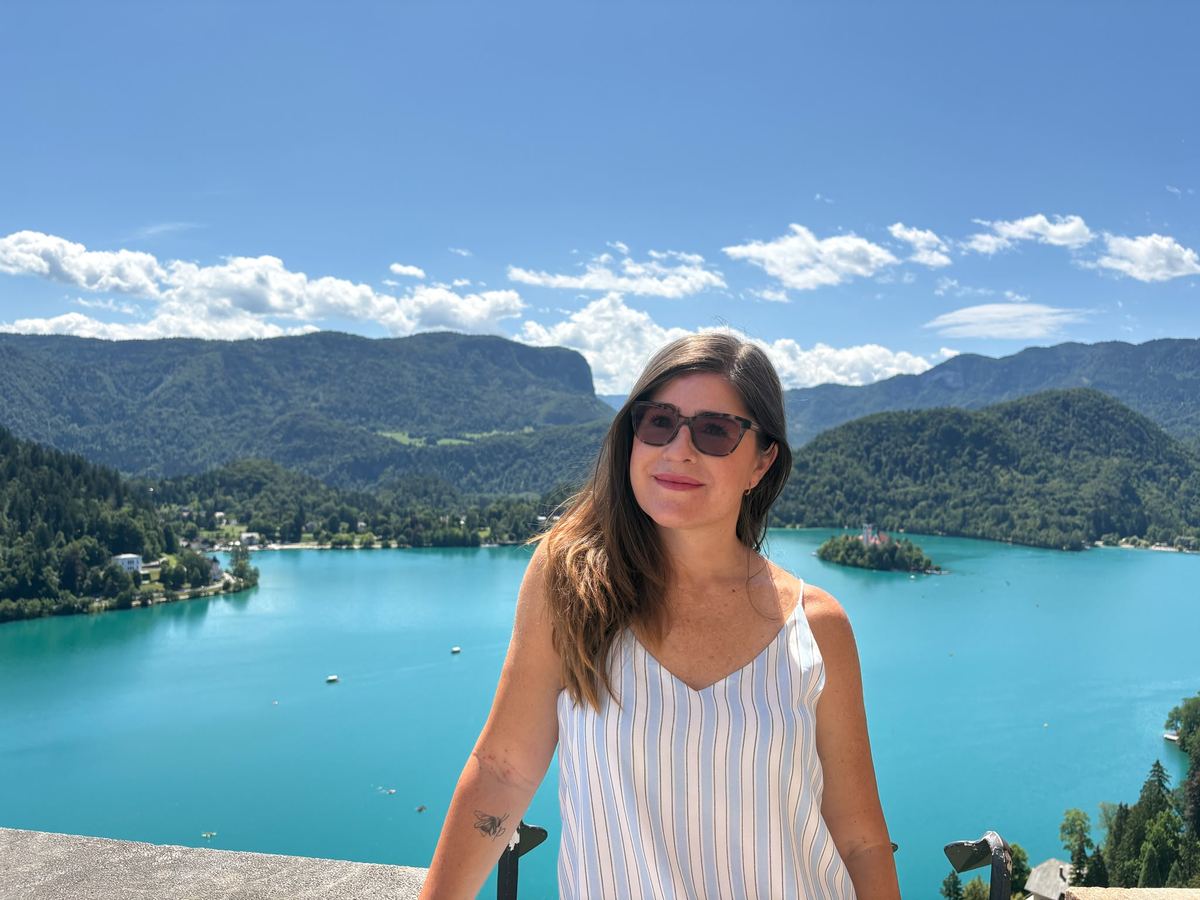
Abby was diagnosed with skin cancer in early 2025. She had two basal cell carcinomas on her nose, which had to be removed. Her face was then reconstructed with several rounds of surgery. Abby speaks English and Dutch, and now shares her story on Instagram to help other people know what to look for.
Follow Abby on Instagram: @abby_in_progress →
How it started
"I noticed a dry patch on my cheek and I immediately thought, I need to get this checked. When I walked into the dermatologist and said, 'Oh, about my cheek,' she said, 'I don't care about your cheek. I'm worried about what's on your nose.' That's how the whole situation started."
"Mine didn't look like the skin cancer you read about. On one side it was a little pimple that came and went for months. On the other it just looked like a patch of different pigmentation. It had a little white bit on it, but it wasn't poppable. I would never have gone in for that pimple. It wasn't what I thought cancer looked like."
What I wish I had been told
"If I had someone like me then, that would have been amazing, just to tell me it's going to be okay. The first plastic surgeon I saw was really harsh. It felt like he wanted to punish me for something I'd done to myself, even though the sun damage happened when I was a child. If someone had told me it's going to be awful, but it's going to be okay, I would much have preferred that."
"They told me they would do a forehead flap. They'd remove my nose and my forehead would become my nose, over five or six surgeries. I thought, but I've just got two spots on my nose. I remember driving home from that hospital with my husband thinking, how is this the reality of what I have to go through?"
When the hard part came after the surgery
"After the first four surgeries I got my face back, and I fully crashed. I had spent so long thinking about what I would look like physically, and I did not prepare mentally at all. That really caught me off guard. It was probably more damaging than anything I went through with my face."
"I was in fight mode the whole time, so I assumed that was just my personality. When I first crashed, I told my therapist she'd be disappointed because I wasn't doing well. She said, 'Finally. You didn't think you could act like that the whole time and be okay? That was fight mode.'"
"I kept thinking it was a straight line. Every step I'd think, I'm getting better, this is going great. Then something would trigger me and I'd feel like such a failure. It's not linear."
"If anyone asked how I was, I couldn't even have a conversation. I'd just cry, because I couldn't put into words how I was. It really just sucks, and you have to do it, there's no choice. But having someone validate that it is what it is, helps."
Appointments, aftercare and language
"I speak Dutch and it's fine, but it takes more energy, and my mind wasn't up for it. My surgeries were very visual and descriptive, so I knew what they were doing. The aftercare was harder: can I do this yet, do I have to wait, how often do I need to do wound care? Thank God for my husband."
"The nurses who came to clean my wound were a different person each day, and they all did it slightly differently. Some hurt more than others. And that was partly a translation thing too."
"I really know who I would share my lottery winnings with now, the people who stepped up. My friends organised a meal train, and my husband didn't cook for six weeks."
Finding CSN
"I started sharing my story on Instagram, and someone from CSN reached out and asked if it was something I'd be interested in. It wasn't until I was on holiday and starting to feel okay again that I got in touch with CSN's founder, and she put me in the group. It was like a breath of fresh air."
"The week before one of my operations, I opened the hospital app to check my appointment time and it wasn't there. It was six o'clock at night, so I couldn't call anyone. My husband said, 'It's fine, you'll find out tomorrow.' So I put it in the group, and everyone said, 'Oh my god, I'm so sorry, I know you're not going to sleep tonight.' It felt so validating to find people who understood this anxiousness. It really made me feel normal."
"I did the smash room with some of the girls a few weeks ago, and it was exactly what we all needed. When I was sitting at home with all the stitches in my face, seeing the photos of the Dam tot Dam walk and such a community, I don't often get FOMO, but that was a real one. I'm already signed up for next year."
Helping other people
"I already have a lot of people reaching out on Instagram, or who just want to tell me their story. A woman in Rotterdam found me because she was about to have the same surgery. We've met a few times, and I've put her in the CSN group too. She said, 'You don't understand how nice it is to know these things.'"
"Another woman who had read my story had just moved to Amsterdam, so the three of us got together for brunch. We just cried at the table. We're all at different stages, but we relate to this one thing."
Reaching out for support
"You've got to get over it, because the validation you feel is so much more rewarding than the nervousness you're holding inside. I joined thinking, I'm fine. I didn't really realise what I was getting into, and within a couple of weeks it had already paid off."
Checking your skin
"When people say skin cancer, they think of a mole. It's not always that. It can come in all different shapes and sizes. These were not the deadly kind, thank God, but they did real damage to my face. I've just had my fifth surgery because the cancer got into the cartilage in my nose."
"If you think there's something, go and get it checked. I was in that dermatologist's office for a reason. My body sent me in."
This is Abby's personal experience, shared with permission. It is not medical advice. If you need urgent help, contact your GP or huisartsenpost, or call 112.